

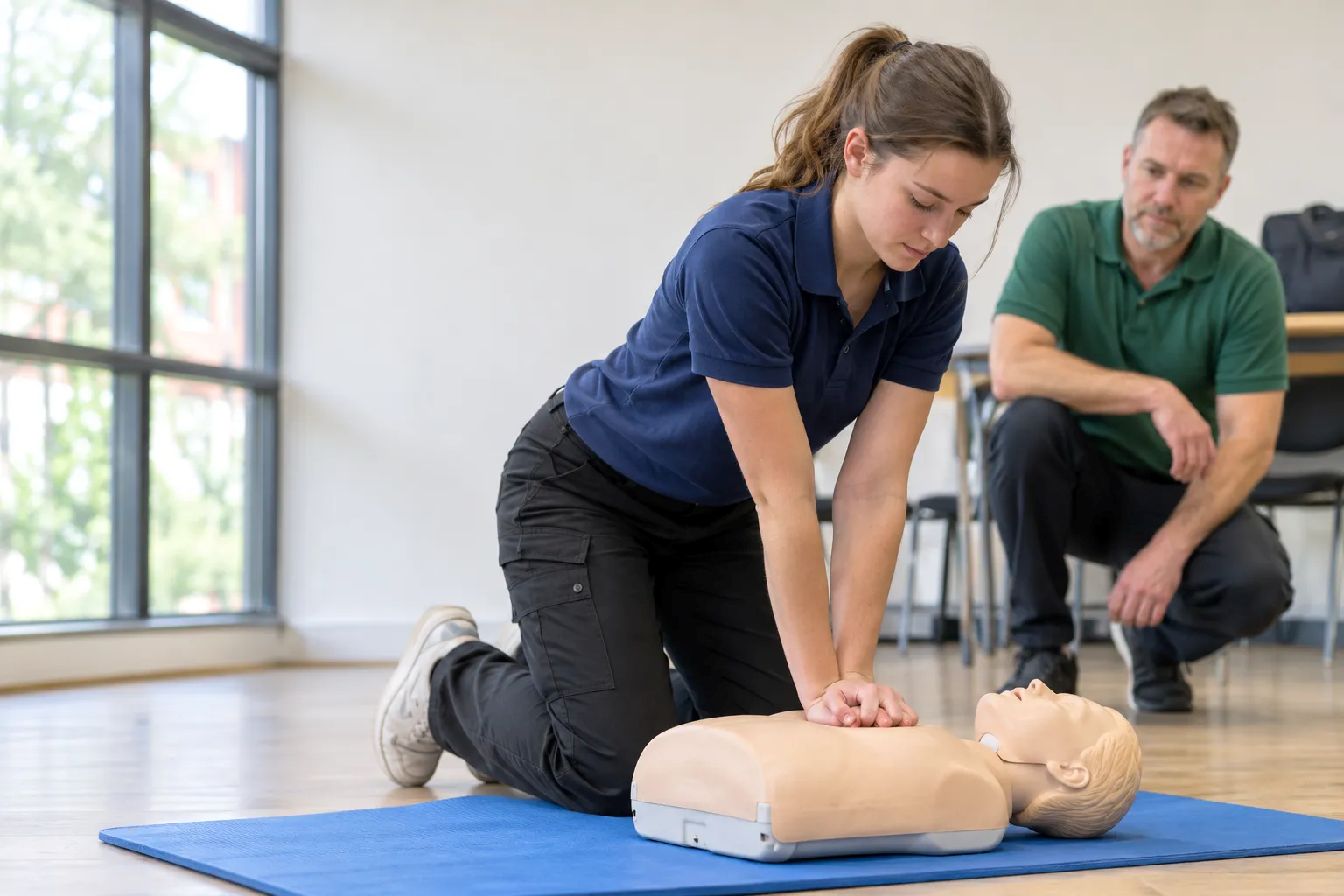
Quick Answer: A first aid certificate shows employers you can stay calm and act in an emergency, and it's a requirement or a clear advantage in many roles, from childcare to sport coaching. In the UK, Emergency First Aid at Work takes at least six hours and First Aid at Work at least 18 hours, and both certificates last three years.
Two candidates apply for the same Saturday job at a leisure centre. Their grades match and their CVs look alike, but one lists a current first aid certificate.
Guess who gets the interview. It's a small line on a CV, yet it answers a question every employer quietly asks: can this person cope when something goes wrong?
This guide explains what a first aid certificate is, why it helps your CV, which jobs value it most and how to choose a course. It also covers the limits, because a certificate isn't a magic key. If you're still planning your studies, our Course Finder can help you compare options.
What Is a First Aid Certificate?
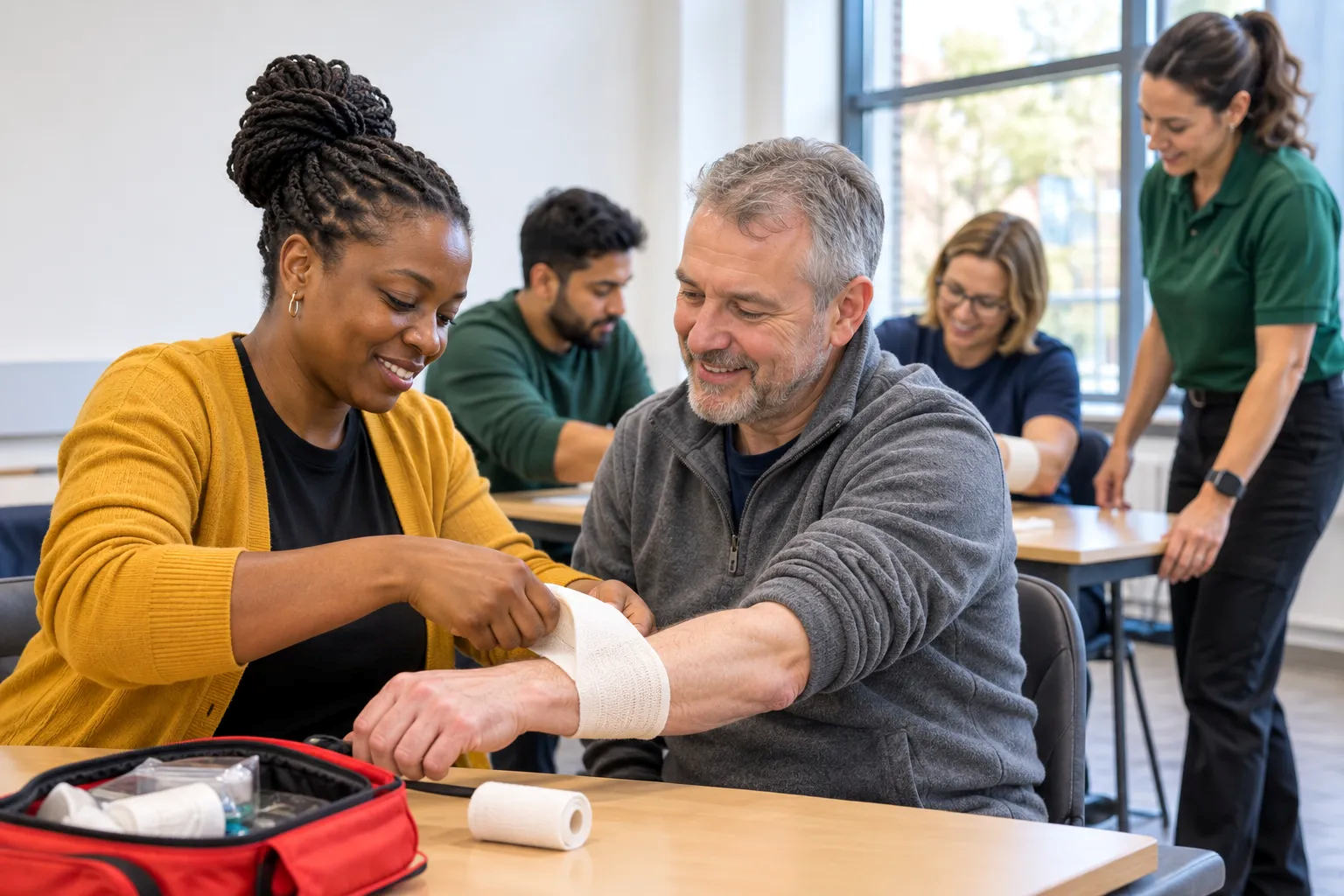
A first aid certificate proves you've completed training in how to respond to injuries and sudden illness until professional help arrives. In UK workplaces, the two main courses are Emergency First Aid at Work (EFAW) and First Aid at Work (FAW).
The Health and Safety Executive (HSE) sets the syllabus for both. Here's how they compare, based on HSE guidance.
Feature | EFAW | FAW |
Minimum length | 6 hours (1 day) | 18 hours (3 days) |
Covers | Emergency first aid for someone injured or taken ill at work | Everything in EFAW, plus a wider range of injuries and illnesses |
Certificate lasts | 3 years | 3 years |
Best for | Most low-risk workplaces and CV building | Higher-risk workplaces and larger teams |
For a CV, EFAW is usually the sensible starting point. It's a single day, and it gives you the core skills most employers want.
Why Does a First Aid Certificate Look Good on a CV?
It shows practical skills, responsibility and calm under pressure, which are hard to prove with grades alone. It also makes you more useful to a team from day one.
Here's what employers read into it:
• Initiative: You paid for and finished training nobody forced you to take.
• Reliability: Teams value a person who can respond if a colleague collapses or a customer is hurt.
• Lower cover pressure: A business that needs a trained first aider on shift can use you.
• Transferable skills: Staying calm, communicating clearly and following a process apply in any role.
The trade-off is that it won't replace experience. It adds weight to a CV that already shows the basics, but it rarely wins a job on its own.
Which Jobs Value a First Aid Certificate?

Roles with children, customers, vulnerable people or physical risk value it most. In some, it's close to essential.
• Childcare and early years: Settings in England need staff with a current paediatric first aid certificate, so check the current framework for your role.
• Teaching and teaching assistant roles: Schools look for staff who can respond to playground injuries and medical needs.
• Sport and fitness: Coaches, instructors and lifeguards are expected to know how to respond.
• Hospitality and events: Busy venues often need a trained first aider on shift.
• Health and social care: It supports your application, though employers usually provide their own mandatory training.
• Construction, trades and security: Risk is higher, so trained first aiders are in demand.
If you're a student, a first aid certificate also strengthens part-time and holiday job applications. If you're still working out your route into study, see our guide to university routes without A-Levels.
How Do You Add a First Aid Certificate to Your CV?
Put it in a "Qualifications and Training" section, with the course name, your provider's name and the expiry date. Keep it short and specific.
For example:
Emergency First Aid at Work, completed October 2026, valid to October 2029
Then follow these tips:
• Mention it in your cover letter if the role involves people, children or risk.
• Add it to your LinkedIn profile under Licenses and Certifications.
• Note any practical use, such as supporting a sports club or running a volunteer event.
• Track the expiry date so it never lapses on your CV.
How Long Does a First Aid Certificate Last and What Does It Cost?

A first aid at work certificate lasts three years. To stay valid, you must complete a requalification course before it expires. Once it lapses, you're no longer considered competent to act as a workplace first aider.
HSE also strongly recommends annual refresher training of at least half a day during each three-year period. It isn't mandatory, but it keeps your skills sharp.
Prices vary by provider, location and course length, so compare a few quotes. Many employers, colleges and sports clubs will pay for staff or volunteers to train, so ask before you book.
What Are the Limits of a First Aid Certificate?
It proves you've been trained, not that you're a healthcare professional. It also won't help much if it's out of date or comes from a weak provider.
Keep these points in mind:
• No official provider approval: Since 2013, HSE no longer approves first aid providers or qualifications, so you need to check quality yourself.
• It expires: A lapsed certificate adds little to your CV.
• Not every employer asks for it: For some roles it's a bonus, not a requirement.
• Skills fade: Practise what you learn, since confidence drops without it.
How Do You Choose a First Aid Course?

Pick a course that matches the work you want to do. Then check the provider before you pay.
• Choose the right level: EFAW for most CV needs, FAW for higher-risk roles, paediatric for childcare.
• Check the syllabus follows the HSE syllabus for workplace courses.
• Ask about the awarding body and whether the certificate is regulated.
• Look for hands-on practice with CPR, defibrillator and recovery position training.
• Confirm the certificate details, including how long it lasts and how you get it.
Frequently Asked Questions
Is a first aid certificate worth putting on a CV?
Yes, especially for roles involving people, children or physical risk. It shows initiative and practical skills, and it can set you apart when other qualifications are similar.
How long does a first aid certificate last?
Workplace first aid certificates last three years. You need to complete a requalification course before the expiry date to renew.
What's the difference between EFAW and FAW?
EFAW takes at least six hours and covers emergency first aid. FAW takes at least 18 hours and adds a wider range of injuries and illnesses.
Can I get a first aid certificate as a student?
Yes. Many providers run short courses, and some colleges, sports clubs and employers fund them. Ask your provider about age rules and student pricing.
Your Next Step
A first aid certificate is a small investment that can make a CV stand out, especially for part-time work, volunteering and early career roles. Choose the right level, keep it current and mention it where it counts.
Planning your studies too? Browse undergraduate degree options, read our foundation year guide, or talk to our team when you're ready to apply.